



Food and Livelihoods
Mangroves sustain fisheries and shellfish harvesting (e.g., piangua), providing food and income for coastal communities.

Coastal
Protection
Mangrove roots buffer waves, reduce erosion, and shield coastal communities and infrastructure.

Cultural Identity and Well-being
Beyond protection and food, mangroves sustain cultural and spiritual practices that shape the identity of coastal communities.

Blue Carbon Storage
Mangrove sediments store extraordinary amounts of carbon, helping regulate the global climate.
Why MangrovES?
Although they cover less than 1% of the planet’s tropical forests, mangroves are vital ecosystems that support 120 million people, protect coastal communities, shelter extraordinary biodiversity, and store up to five times more carbon per hectare than most tropical forests.
Facing growing threats from climate change, habitat loss, and human pressures, MangrovES develops innovative governance approaches that connect science, communities, and institutions to strengthen mangrove conservation and safeguard their ecological, social, and economic benefits for generations to come.
Four coastal learning landscapes
for governance innovation
With coastlines on both the Caribbean Sea and the Pacific Ocean, Colombia is one of the most biodiverse countries in the world and a key region for mangrove research and conservation. Its mangrove ecosystems support biodiversity, coastal communities, and essential ecosystem services, while also facing growing environmental and socio-economic challenges.
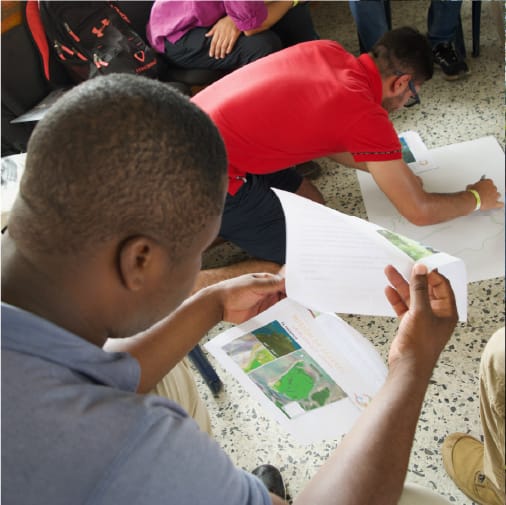
Punta Soldado
Pacific Coast
Valle del Cauca
An innovative approach combining scientific tourism within mangroves, creating learning platforms for local inhabitants and researchers while providing alternative income sources and capacity building opportunities.
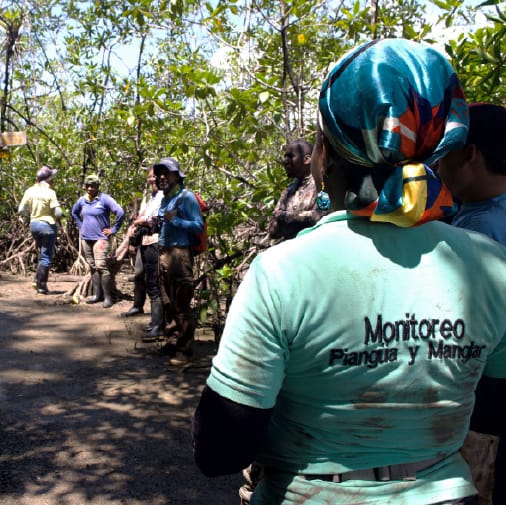
Bahía Málaga
Pacific Coast
Valle del Cauca
Neighbouring initiatives on REDD+ and blue carbon that enable study of transfer processes, cooperation, and knowledge co-creation between regions. The initiatives are partly implemented, managed by the Ministry of Environment (Colombia).
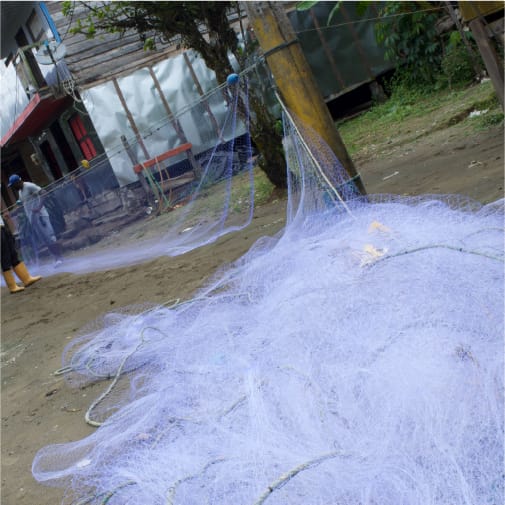
Tumaco
Pacific Coast
Nariño
An Innovation Region that will pilot a tailored governance innovation designed to respond to local ecological, social, and institutional realities while contributing to food security, youth futures, and the long-term resilience of coastal territories.
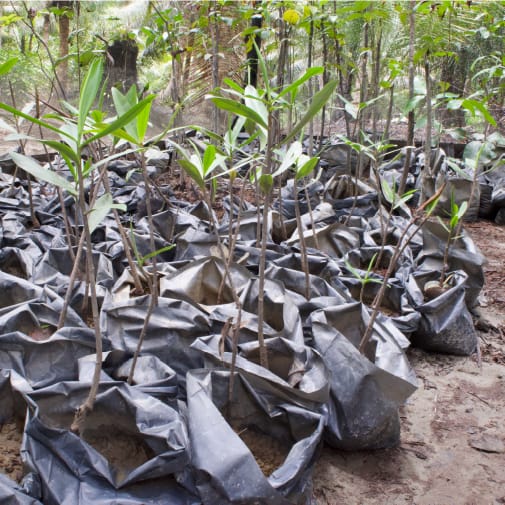
Vida Manglar
Caribbean Coast of Colombia and Kenya, Africa
Pioneering Blue Carbon Scheme operating for 10-15 years, representing the world’s first such initiative with diverse stakeholder participation from private, public, civil society, and academic sectors.
Santiago Valencia
Community and Environmental Leader / La plata, Bahía Málaga.
“Ensuring the conservation of mangrove ecosystems requires a commitment between science and communities. By weaving together scientific and community knowledge, we can develop conservation actions that respect ancestral knowledge and strengthen research from the territory.
This means working hand in hand to create knowledge, research methods, and conservation actions rooted in the communities themselves.”
Michelle Sinisterra
Community Leader / Punta Soldado, Buenaventura
“The MangrovES project gives us tools to address the challenges we face in our community. It brings science and community knowledge together, allowing us to learn from other experiences, strengthen our restoration efforts, and build new knowledge within the community.”
Our latest News
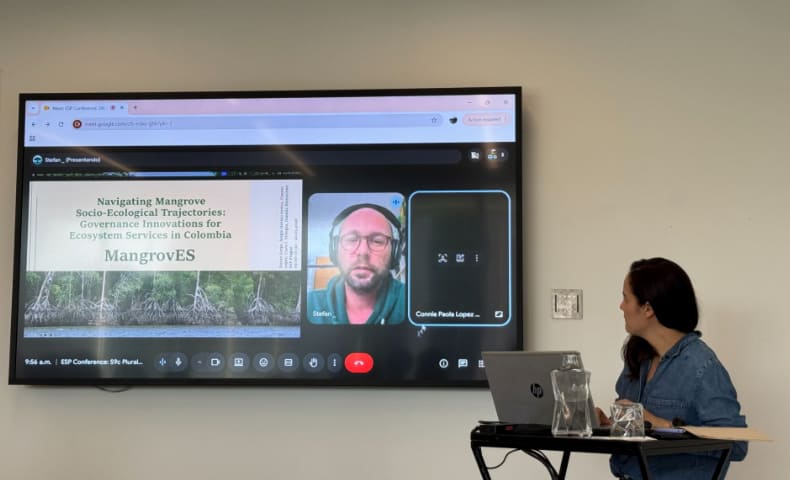
MangrovES Team Presents at the 6th European ESP Conference in Prague
The MangrovES project team presented the latest progress of its research at the 6th European Conference of[…]
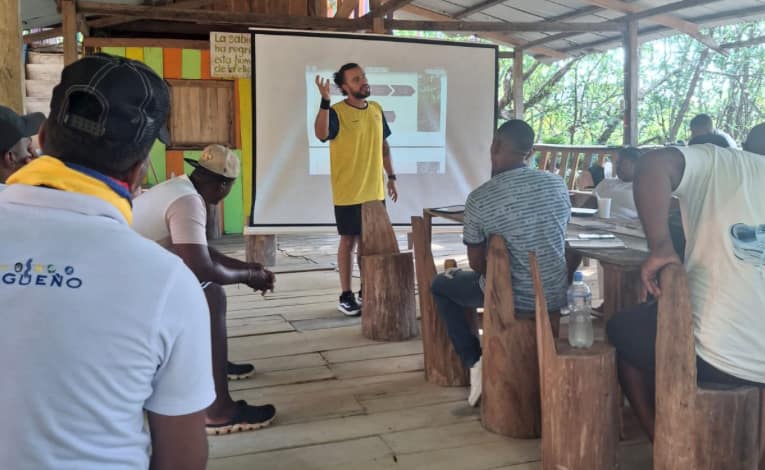
MangrovES’ First Fieldwork in Buenaventura, Colombia’s Pacific Region
The MangrovES research team conducted its first field visit from 2 March to 6 April 2026 in[…]
The team
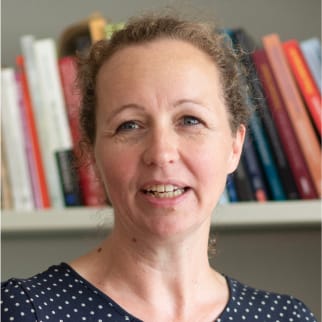
Daniela Kleinschmit
Project leader and Professor of Forest and Environmental Policy.
University of Freiburg, Germany.
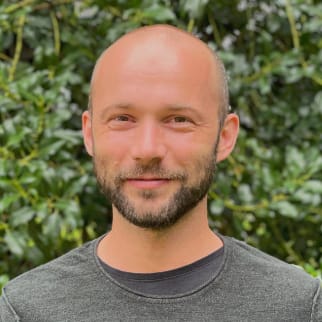
Stefan Sorge
Project leader and Researcher in Mangrove Governance.
University of Freiburg, Germany.
Clara Villegas Palacio
Full Professor. Universidad Nacional de Colombia, Sede Medellín.
CEMarin Researcher
Sergio Herazo Areiza
PhD Student in Water Resources.
Universidad Nacional de Colombia, Sede Medellín.
CEMarin Early Stage Researcher
Andres Fernando Osorio
Full Professor. Universidad Nacional de Colombia, Sede Medellín.
Ex-executive Director at CEMarin
Linda K. López Abuchar
Master student in Marine Biology, International Studies in Aquatic Tropical Ecology.
Student Assistant-ZMT
University of Bremen
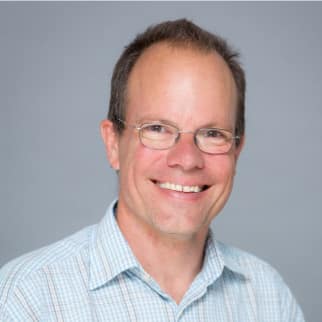
Achim Schlüter
Leader Programme Area Coastal Resources, Working Group Institutional and Behavioural Economics.
Leibniz Centre for Tropical Marine Ecology – ZMT
CEMarin Researcher
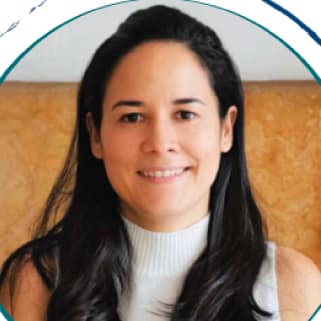
Connie López
Full Professor. Universidad Nacional de Colombia, Sede Medellín.
CEMarin Researcher
Partner institutions
Get involved
MangrovES welcomes collaboration with coastal communities, researchers, NGOs, policymakers, students, and international partners working toward sustainable ecosystem service provision.